

Excessive Tearing (Epiphora)
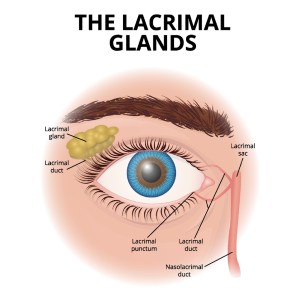 Your body produces tears to protect your eyes from dust and other foreign materials. Tears are produced by your lacrimal glands, which are located under your upper eyelids. They are then drained away through your tear ducts near the bottom of your eye.
Epiphora, referred to more commonly as watery eyes or excessive tearing, results from the overproduction of tears, inadequate drainage, or both, and can affect people of any age.
The condition can present for a host of reasons, many of which will resolve on their own, but it can also be a sign of a serious eye infection or a blockage in your tear ducts. If symptoms persist or worsen, it could be signs of a more serious infection or problem with your eyes, and you should schedule a visit with your doctor.
SYMPTOMS
The primary symptom of epiphora is watery eyes. Other symptoms can include:
- Eye redness
- Eye soreness or sharp pain in the eyes
- Swelling of the eyelids
- Enlarged blood vessels in the eyes that become visible
- Blurry vision
- Sensitivity to light
CAUSES
There are a variety of situations that can cause epiphora, including:
- Cold, flu, or sinus infection
- Scratch, cut, foreign object in the eye
- Environmental irritant, such as wind or smoke
- Allergies such as hay fever or allergic rhinitis
- An eye infection or inflammation of the eye or eyelid such as keratitis, pink eye, a stye, or an infected ingrown eyelash
- Some medications can cause excessive tear production
- Improper eyelid positions
- Trichiasis – a common eyelid abnormality in which eyelashes grow back towards and into the eye
- Entropion – a condition where the eyelids turn inward, causing eyelashes and skin to rub, resulting in irritation
- Ectropion – a condition in which your eyelid turns outward, leaving the inner eyelid surface exposed and prone to irritation
- A tear duct that becomes obstructed or narrowed due to a foreign object, inflammation, or infection (Dacryocystitis)
DIAGNOSIS
Diagnosis of epiphora begins with a visual examination of your eyes and eyelids. The doctor may also use a lighted scope to observe your eye’s blood vessels. Your tears and any pus or eye discharge may also be tested to determine if there is a bacterial or viral infection causing your watery eyes.
When there is a suspected drainage problem, the doctor examines the tear drainage channels. A thin stick is inserted in the small channels (canaliculi) toward the tear sac to check whether there is a blockage. Fluid is flushed into the tear duct to check whether it comes out of the nose. This process has been known to clear the blockage but gives only temporary relief.
If there is a blockage, a dye is injected into the tear duct. The doctor takes an X-Ray that shows the exact position of the obstruction in the tear duct.
In some cases, the patient may also need to see an eye-care specialist doctor or ophthalmologist, who will examine the eyes.
TREATMENT
Treatment for epiphora will depend on the specific cause.
COMMON CAUSES – Possible remedies include:
- Flushing out foreign objects with clean water
- Treating or avoiding allergy triggers
- Allowing a viral infection to run its course or treating a bacterial infection with antibiotics
- Use of a warm compress to help clear tear duct blockages
- Artificial tear drops for dry eyes
ENTROPION | ECTROPION – Possible remedies include:
- Lid repair and punctual irrigation. An Ophthalmologist may be consulted.
BLOCKAGE– Possible remedies include:
- If a patient has lacrimal sac or nasolacrimal duct obstruction, an Endoscopic Dacryocystorhinostomy (DCR) may be pursued to treat the problem.